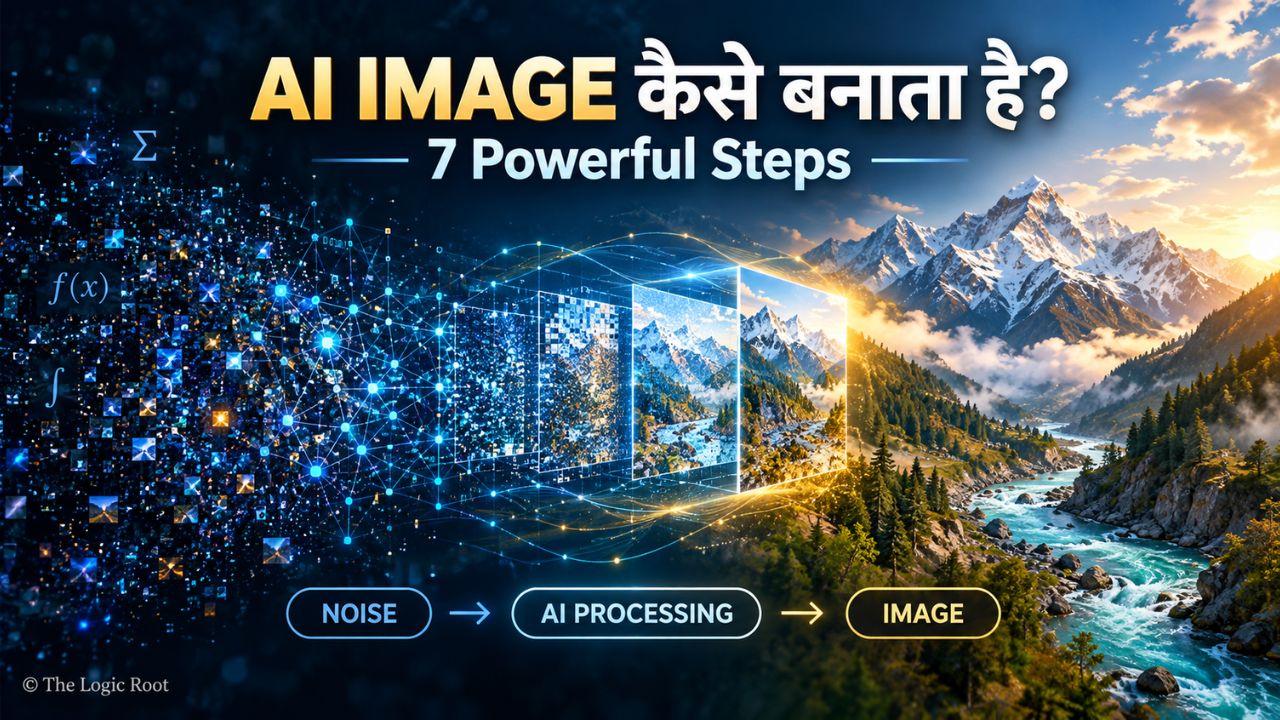
आज अगर आप किसी AI tool से कहें, “बर्फ से ढके पहाड़ों के बीच एक नदी दिखाओ”, तो कुछ ही सेकंड में आपके सामने एक ऐसी तस्वीर आ सकती है जो देखने में किसी photographer की खींची हुई photo जैसी लगे।
लेकिन यहाँ एक interesting सवाल आता है।
AI आखिर image बनाता कैसे है?
क्या उसके अंदर पहले से लाखों तस्वीरें रखी होती हैं और वह उनमें से कोई एक तस्वीर निकालकर हमें दे देता है?
नहीं।
AI image generation की असली कहानी थोड़ी अलग है। वह तस्वीर को वैसे नहीं समझता जैसे हम अपनी आँखों से समझते हैं। वह images के अंदर मौजूद patterns, shapes, colors, textures और relationships से सीखता है और फिर सीखी हुई information के आधार पर एक नई image generate करता है।
यही logic समझना जरूरी है, क्योंकि AI की image generation कोई जादू नहीं है। इसके पीछे mathematics, machine learning और neural networks की एक पूरी process काम करती है।
Simple Logic:
इंसान तस्वीर को देखता है और उसका मतलब समझता है।
AI data में मौजूद patterns को सीखता है और उन्हीं patterns के आधार पर नई image बनाता है।
AI Image बनाने से पहले क्या सीखता है?
AI को सीधे यह नहीं बताया जाता कि “यह पहाड़ है, यह नदी है और यह पेड़ है” और फिर वह image बनाना शुरू कर देता है। इसके पीछे training की एक लंबी process होती है।
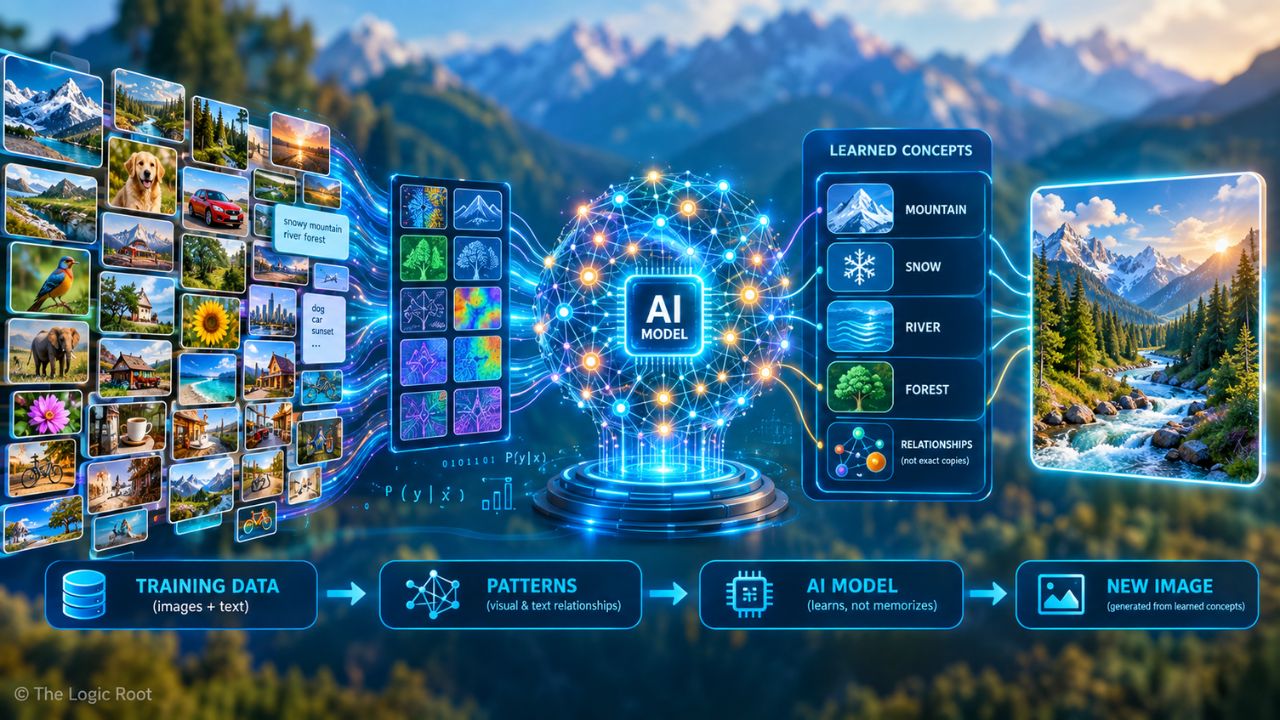
AI models को बहुत बड़ी मात्रा में image-text data से train किया जा सकता है। उदाहरण के लिए, training data में ऐसी images हो सकती हैं जिनके साथ उनके descriptions जुड़े हों।
जैसे:
- Mountain
- Snow-covered mountain
- Blue river
- Forest
- Sunset
- Dog
- Car
धीरे-धीरे model यह सीखता है कि अलग-अलग words और visual patterns के बीच किस तरह का relationship होता है। यही concept हमारे पिछले article “Artificial Intelligence” में detail में समझाया गया है।
वहाँ हमने देखा था कि AI data से patterns सीखता है। Image generation में यही basic idea visual information पर लागू होता है।
AI किसी Image को Pixel-by-Pixel कैसे देखता है?
यहाँ एक छोटी सी बात समझना बहुत जरूरी है। हम किसी तस्वीर को देखकर कहते हैं:
“यह पहाड़ है।”
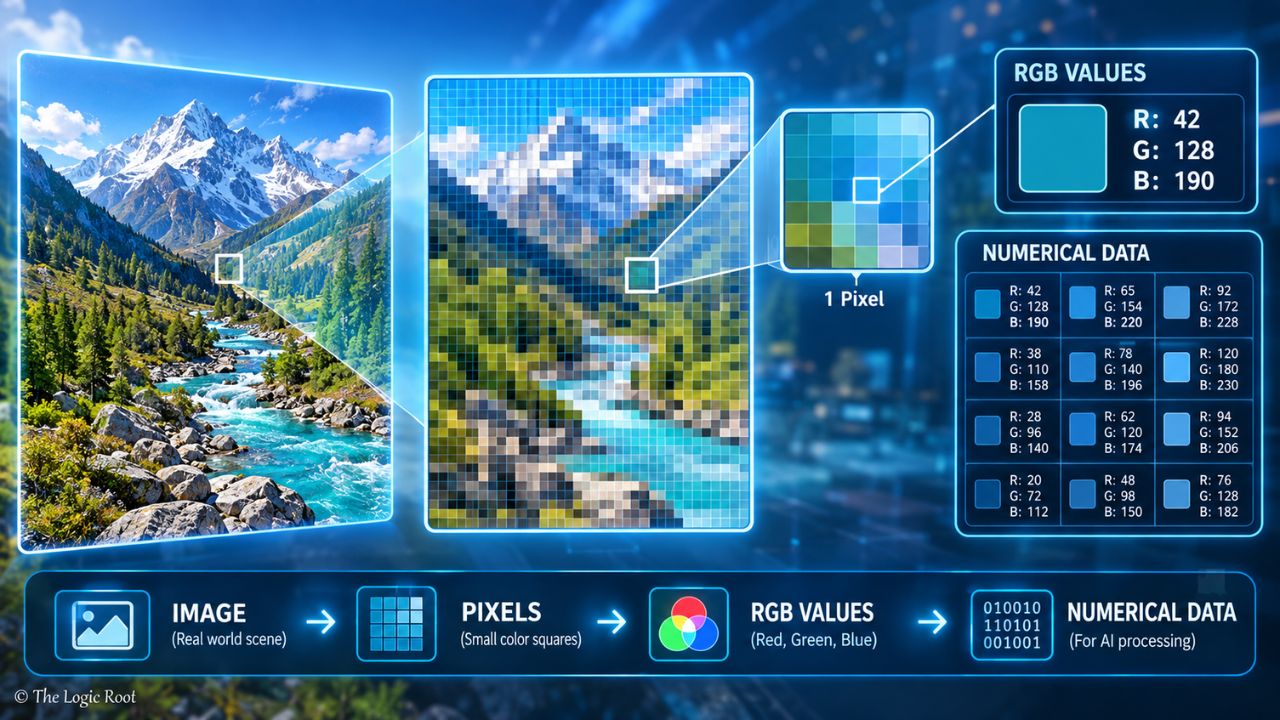
लेकिन computer शुरुआत में ऐसा नहीं सोचता। Computer image को numbers के रूप में process करता है।
एक digital image बहुत सारे pixels से बनी होती है और हर pixel के अंदर color information होती है। RGB image में सामान्यतः Red, Green और Blue channels की numerical values होती हैं। यानी computer के लिए तस्वीर सिर्फ:
रंग + pixels + numerical patterns
का एक बहुत बड़ा collection हो सकती है। AI इसी numerical information में patterns ढूँढना सीखता है।
उदाहरण के लिए, हजारों images देखने के बाद model ऐसे visual relationships सीख सकता है कि कुछ खास shapes और textures अक्सर mountain images में दिखाई देते हैं।
लेकिन ध्यान रहे, इसका मतलब यह नहीं है कि AI इंसान की तरह “पहाड़” को महसूस या देख रहा है। वह mathematical patterns को process कर रहा है।
फिर AI को कैसे पता चलता है कि Prompt में क्या लिखा है?
अब मान लीजिए आपने लिखा:
“एक शांत हिमालयी घाटी में नीली नदी और बर्फ से ढके पहाड़।” यह text सीधे pixels में convert नहीं हो जाता। पहले AI को आपके शब्दों का mathematical representation बनाना पड़ता है। इसे आसान भाषा में समझें।
आपका prompt:
“बर्फ से ढके पहाड़”
AI के लिए केवल शब्द नहीं रहता। Model text के अलग-अलग हिस्सों के बीच relationships को represent करता है। उसे यह समझना होता है कि:
snow + mountain + valley + river
जैसे concepts एक साथ किस तरह की visual information से जुड़े हो सकते हैं। यही कारण है कि अच्छा prompt देने पर image में कई अलग-अलग elements एक साथ दिखाई दे सकते हैं।
Diffusion Model क्या होता है?
आज के कई popular text-to-image systems में diffusion-based approach का इस्तेमाल किया गया है। नाम थोड़ा technical है, लेकिन इसका basic idea काफी interesting है।
मान लीजिए आपके पास एक साफ तस्वीर है।
अब उसमें धीरे-धीरे noise डालते जाएँ। कुछ समय बाद तस्वीर इतनी खराब हो जाएगी कि original image पहचानना मुश्किल हो जाएगा। AI training के दौरान model इस तरह के process से यह सीख सकता है कि noisy information से meaningful visual structure की तरफ कैसे वापस जाना है।
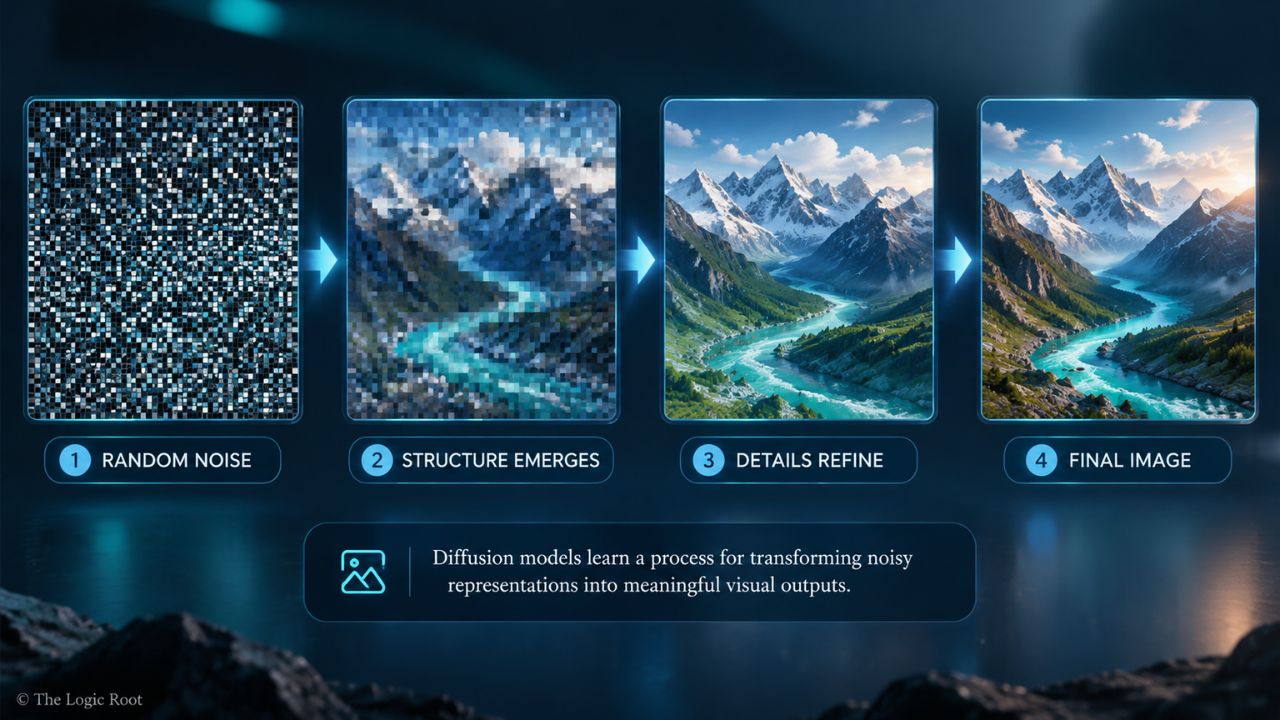
अब generation के समय process उलटी दिशा में इस्तेमाल की जा सकती है।
यानी:
Noise → Structure → Details → Final Image
इसी idea को diffusion process के simplified रूप में समझ सकते हैं।
AI Image बनाते समय शुरुआत में क्या दिखता है?
कई diffusion systems में generation की शुरुआत random noise जैसी information से होती है। पहली नजर में वहाँ कोई पहाड़, नदी या इंसान दिखाई नहीं देता।
लेकिन model धीरे-धीरे noise को modify करता है। हर step पर वह अपनी learned information के आधार पर यह तय करता है कि image को आपके prompt के ज्यादा करीब कैसे लाया जाए।
उदाहरण:
Prompt:
“Snow-covered Himalayan mountain with a turquoise river”
तो generation के दौरान model धीरे-धीरे ऐसी visual structure की तरफ जाता है जिसमें mountain, snow, river और उनके बीच का spatial relationship prompt से मेल खाए।
इसे ऐसे समझ सकते हैं:
Random Noise
↓
Basic Shapes
↓
Objects और Composition
↓
Colors और Texture
↓
Fine Details
↓
Final Image
असल mathematical process इससे काफी ज्यादा complex होती है, लेकिन concept समझने के लिए यह model useful है।
AI को कैसे पता चलता है कि नदी नीली होनी चाहिए?
यह सवाल काफी interesting है।
AI के अंदर किसी एक simple rule की तरह यह नहीं लिखा होता:
River = Blue
असल में model training के दौरान बहुत सारे visual patterns और text relationships सीखता है।
अगर training data में “blue river”, “turquoise water”, “mountain river” जैसे descriptions और corresponding visual patterns बार-बार दिखाई देते हैं, तो model इनके बीच statistical relationships सीख सकता है।
इसलिए जब आप prompt में “turquoise river” लिखते हैं, तो model उस concept से जुड़े visual patterns को generation में इस्तेमाल करता है।
- लेकिन यही वजह है कि AI हमेशा perfect नहीं होता।
- कभी-कभी नदी का रंग unnatural हो सकता है।
- कभी हाथों की संख्या गलत हो सकती है।
- कभी buildings की structure अजीब बन सकती है।
क्योंकि AI किसी scene को इंसान की तरह वास्तव में observe नहीं कर रहा। वह learned patterns के आधार पर generation कर रहा है।
क्या AI हर बार एक जैसी Image बनाता है?
नहीं।
एक ही prompt को दोबारा चलाने पर भी अलग image मिल सकती है। इसका कारण generation process में randomness और model की sampling process से जुड़ा होता है।
उदाहरण के लिए prompt वही है:
“Snowy Himalayan valley with a river at sunrise.”
- पहली generation में river foreground में आ सकती है।
- दूसरी में mountains ज्यादा dominant हो सकते हैं।
- तीसरी में composition बिल्कुल अलग हो सकती है।
इसलिए AI image generation को सिर्फ “एक command और एक fixed answer” की तरह समझना सही नहीं होगा।
Prompt जितना साफ, Image उतनी controlled क्यों होती है?
यहीं से prompt engineering की importance शुरू होती है।
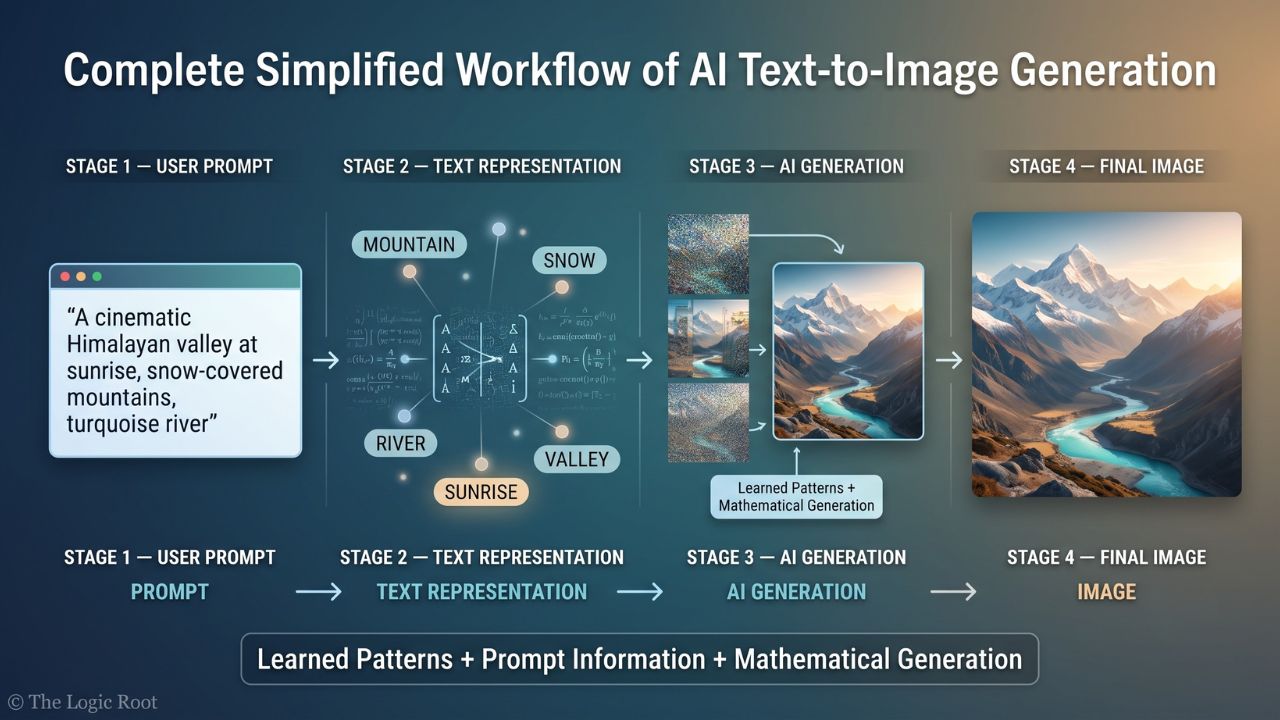
अगर आप सिर्फ लिखेंगे, “एक पहाड़ की image बनाओ।” तो AI के पास बहुत सारी possibilities हैं। लेकिन अगर prompt हो:
“A cinematic Himalayan valley at sunrise, snow-covered mountains in the background, turquoise river flowing through the valley, realistic geographical landscape, soft morning light, wide composition.”
तो model को ज्यादा visual information मिलती है।
आपने इसमें:
- Location type
- Landscape
- Mountains
- River
- Color
- Lighting
- Style
- Composition
जैसी information दे दी। इससे generation को ज्यादा direction मिलती है। हालाँकि detailed prompt भी perfect result की guarantee नहीं देता।
तो आखिर AI Image बनाता कैसे है?
पूरी process को एक simple chain में समझें:
1. Training Data
AI बड़ी मात्रा में visual और text information से patterns सीखता है।
2. Pattern Learning
Model images में shapes, textures, colors और relationships को mathematically represent करना सीखता है।
3. Prompt Understanding
आपके text prompt को model ऐसी representation में बदलता है जिसे वह visual generation से connect कर सके।
4. Noise से शुरुआत
Diffusion-based systems में generation random noise से शुरू हो सकती है।
5. Step-by-Step Transformation
Model धीरे-धीरे noise को modify करके prompt से संबंधित visual structure बनाता है।
6. Details Add होती हैं
Shapes, colors, textures और छोटे visual details refine होते जाते हैं।
7. Final Image
अंत में एक नई image तैयार होती है जो prompt और model की learned visual patterns के आधार पर generated होती है।
यानी simple शब्दों में:
AI किसी पुरानी तस्वीर को बस उठाकर नहीं देता। वह सीखे हुए patterns के आधार पर नई visual information generate करता है।
AI Image Generation की असली Root क्या है?
अगर पूरी बात को एक line में समझना हो तो:
AI Image Generation = Learned Patterns + Prompt Understanding + Mathematical Generation
यही इसकी असली root है। और यही connection हमारे AI series के पिछले articles से भी बनता है। पहले हमने समझा कि AI data से सीखता कैसे है। अब हमने देखा कि वही learned patterns image generation में कैसे इस्तेमाल हो सकते हैं।
The Logic Lab FAQs: AI Image Generation
1. क्या AI किसी existing image को copy करके नई image बनाता है?
जरूरी नहीं। Generative AI learned patterns के आधार पर नई visual output generate कर सकता है। हालांकि training data और model architecture के अनुसार behavior अलग हो सकता है।
2. AI image बनाने में कितना समय लगता है?
यह model, hardware, image resolution और generation settings पर depend करता है। कई modern AI tools कुछ seconds में image generate कर देते हैं।
3. क्या AI हर image में facts सही दिखाता है?
नहीं। AI-generated image visually realistic हो सकती है, लेकिन उसमें geographical या factual errors हो सकते हैं।
4. Prompt का image quality पर असर पड़ता है?
हाँ। स्पष्ट और specific prompt model को ज्यादा visual direction देता है, हालांकि इससे perfect result की guarantee नहीं मिलती।
5. क्या AI इंसान की तरह image समझता है?
नहीं। AI visual information को mathematical representations और learned patterns के माध्यम से process करता है। इसे human-like understanding मानना सही नहीं होगा।

2 Comments